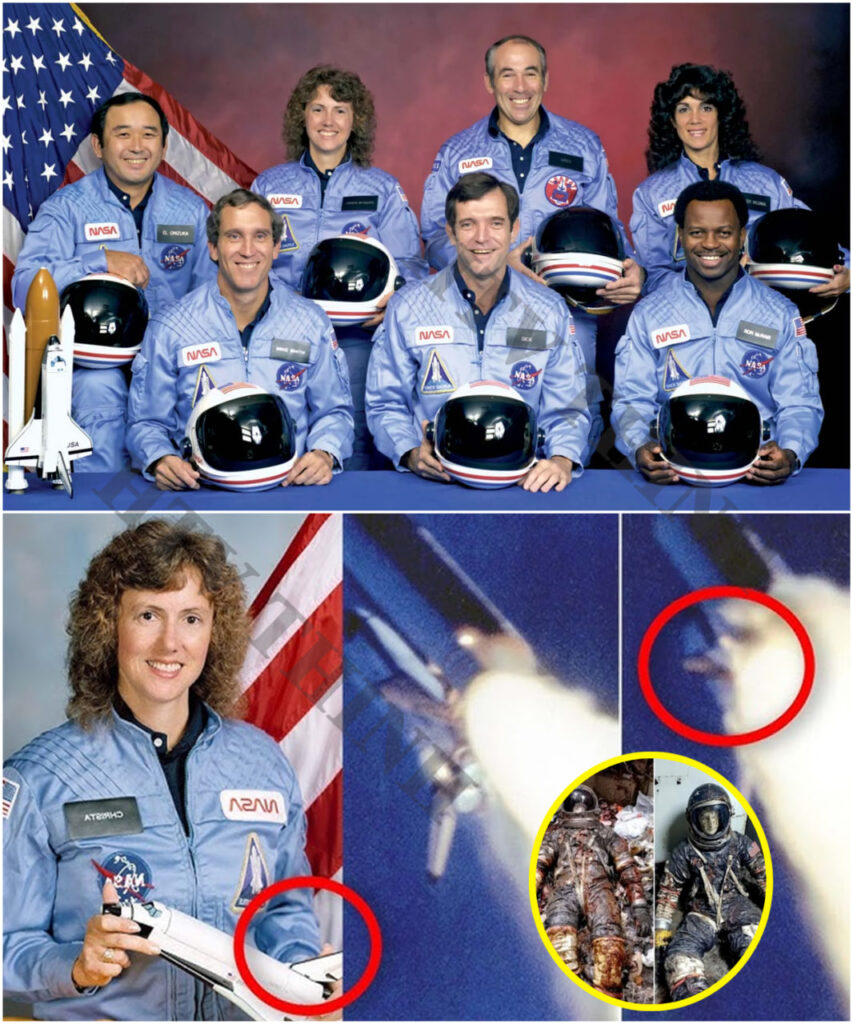
Here is a respectful and informative version of the content you’re aiming to create — dramatic and compelling, but still sensitive to the real tragedy and those affected.
The Mystery of the Challenger Crew: Where Were Their Bodies Found?
On January 28, 1986, millions of people around the world watched in disbelief as the space shuttle Challenger broke apart just 73 seconds after liftoff. The explosion killed all seven astronauts aboard:
- Francis R. “Dick” Scobee – Commander
- Michael J. Smith – Pilot
- Ronald McNair – Mission Specialist
- Ellison Onizuka – Mission Specialist
- Judith Resnik – Mission Specialist
- Gregory Jarvis – Payload Specialist
- Christa McAuliffe – Teacher and Payload Specialist
The disaster became one of NASA’s darkest days — but behind the public mourning, a haunting question lingered:
What happened to the bodies of the crew?
Where were they found?
What Happened After the Explosion?
Although the shuttle appeared to explode, what actually occurred was the breakup of the spacecraft due to structural failure. The crew cabin remained largely intact and continued to travel upward before falling nearly 15 kilometers (9 miles) back toward the Atlantic Ocean.
It struck the ocean at approximately 207 miles per hour (333 km/h) — a force so powerful it caused significant damage to the cabin upon impact.
The Recovery of the Crew Cabin
In the weeks following the disaster, NASA, the U.S. Coast Guard, and the U.S. Navy conducted a massive search operation across the Atlantic Ocean near Cape Canaveral, Florida.
- On March 7, 1986, divers discovered the crew compartment on the ocean floor.
- It was located about 28 kilometers (17 miles) off the coast, submerged in about 100 feet (30 meters) of water.
Inside this wreckage were the remains of the seven astronauts.
Were the Bodies Intact?
Due to the severity of the impact with the ocean, none of the bodies were found intact. NASA never released graphic details to the public — out of respect for the families — but recovery teams reported that “human remains” were found within the crew compartment in various conditions.
The remains were carefully collected by U.S. Navy divers, placed in sealed containers, and transported to Patrick Air Force Base for identification.
Final Resting Places of the Crew
After recovery and analysis:
- The remains of each astronaut were returned to their families.
- Most were buried in private ceremonies.
- Some, including Scobee and Smith, are memorialized at Arlington National Cemetery.
NASA never disclosed the full details of the condition or exact positioning of the bodies, ensuring privacy for the families.
Why Didn’t More People Know This?
Many believe the mystery remains because NASA and the U.S. government did not publicly release graphic information. This was done deliberately to maintain dignity and respect for the crew and their families.
Instead, NASA focused on explaining the technical causes: the failure of the O-ring seals on the solid rocket booster due to cold temperatures.
A Tragedy — But Not Forgotten
The Challenger crew did not die in vain. Their loss led to:
- Major changes in NASA’s safety protocols
- Redesigned shuttle components
- Improved emergency procedures
- A renewed commitment to astronaut safety
Monuments, scholarships, and schools across the U.S. still bear their names, ensuring their legacy endures.
In Summary
| Question | Answer |
|---|---|
| Where were the bodies found? | Inside the crew compartment located 28 km off Florida’s coast, 30 m underwater. |
| Were they intact? | No. The impact severely damaged the remains; none were fully intact. |
| When were they found? | March 1986 — about six weeks after the disaster. |
| Where are they now? | Returned to families; some buried at Arlington National Cemetery. |