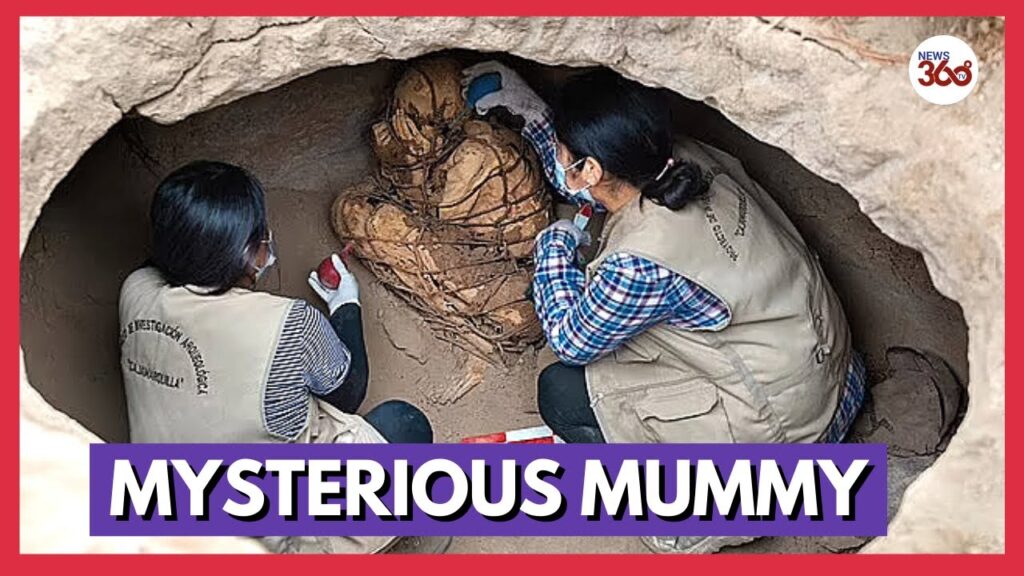
Archaeologists in Peru have uncovered an ancient mummy tightly bound with ropes — a discovery that is rewriting our understanding of early Andean burial practices.
The mummy, estimated to be between 800 and 1,200 years old, was found in a seated, fetal-like position within an underground burial chamber. What stunned researchers was the intricate network of ropes wrapped around the body, suggesting a ritualistic purpose rather than simple preservation.
Experts believe the individual may have belonged to a pre-Inca civilization, possibly from the coastal or highland cultures that thrived long before the rise of the Inca Empire. The ropes indicate a symbolic binding, perhaps representing spiritual protection, a passage to the afterlife, or a cultural belief about keeping the dead “contained” between worlds.
Alongside the mummy, archaeologists discovered tools, ceramic fragments, and small offerings — evidence that the burial was both deliberate and ceremonial. These artifacts will help researchers piece together the social, spiritual, and cultural meaning behind the mysterious practice.
This remarkable find adds another layer to Peru’s rich archaeological history, offering new clues about ancient societies whose beliefs and rituals remain only partially understood today. As studies continue, scientists hope the mummy will reveal more about the daily life, origins, and traditions of the civilization it once belonged to.