💔 When Love Turns Dangerous
It began with smiles — the kind that looked effortless, the kind that made neighbors believe everything was fine. A happy family, a loving mother, and a life that appeared perfect from the outside. Photos showed laughter, family dinners, holidays spent together — a picture of love and stability. But behind those smiles, a darker story was quietly unfolding, one that would end in unimaginable tragedy.
Tausha Haight had once believed in forever. She had built her life around love, family, and faith. To her, marriage was supposed to be safe — a partnership built on trust and devotion. But over time, the man she married, Michael Haight, began to change. What once seemed like care turned into control. What once felt like protection became possession. His words grew sharper, his presence heavier. The man who vowed to cherish her began to make her afraid.
Friends noticed subtle signs — the way Tausha would shrink in conversation when he was near, the way her laughter dimmed, the way she began to disappear from social gatherings. She spoke less and smiled through pain, covering bruises that were invisible but deeply felt. For years, she tried to keep the peace, believing that things might get better if she just loved harder, prayed longer, or stayed quiet enough. But silence didn’t save her. It only allowed the darkness to deepen.
When she finally found the strength to leave, Tausha did everything right. She filed for divorce, sought legal protection, and surrounded herself with family. She moved her children into her mother Gail’s home, hoping that love and safety could rebuild what fear had broken. She was reclaiming her life, one fragile step at a time.
But Michael wasn’t ready to let go. To him, the end of the marriage wasn’t just loss — it was humiliation. Control was his identity, and without it, he felt powerless. The separation fueled his anger. He stalked her quietly, watching her every move, convincing himself that if he couldn’t have her, no one could.
In the weeks leading up to the tragedy, there were warning signs — subtle, chilling clues that something terrible might happen. Tausha told close friends that she was scared. She confided that he had become unpredictable. Even her children sensed it. Yet in so many cases like hers, society teaches women to minimize fear, to keep things private, to hope that love can heal what danger has already poisoned.
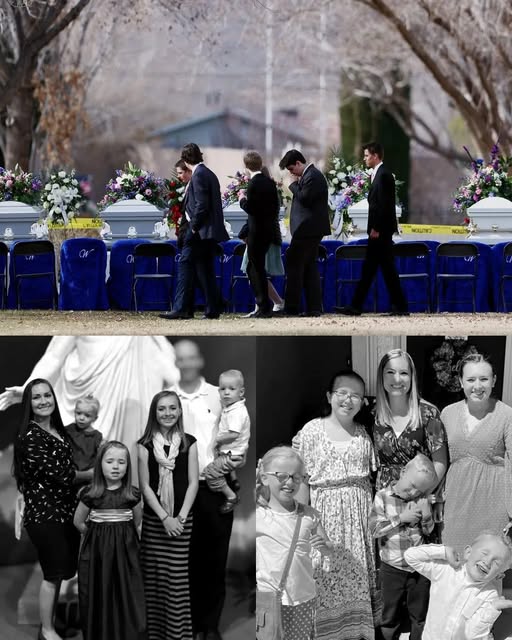
Then came January 4, 2023 — a date that shattered hearts across Utah and beyond. In the quiet town of Enoch, the Haight home fell silent. Inside, police discovered a scene no one could ever forget: Tausha, her five beautiful children, and her mother Gail — all gone. Each life taken by the very man Tausha had once trusted most. Michael Haight turned the weapon on himself afterward, leaving behind a haunting question: How could this happen?
The news spread across the country, sparking grief and outrage. Photos of smiling children — the youngest just four years old — flooded social media. The faces of the Haight family became symbols of a truth too painful to ignore: domestic violence doesn’t always wear bruises. It hides behind closed doors, behind polite smiles, and behind people who seem to have it all.
In the aftermath, Tausha’s friends and community spoke about her bravery, her warmth, and her unwavering love for her kids. She wasn’t just a victim — she was a mother who fought desperately to protect her family. She took every reasonable step the system allowed. But in the end, it wasn’t enough.
Her story forces us to confront an uncomfortable reality: love can turn dangerous when it becomes about control. Abusers often manipulate, isolate, and silence — until the victim begins to question their own strength, their own worth. And when they finally find the courage to leave, that’s often when they’re in the greatest danger.
The tragedy of the Haight family is more than just another headline — it’s a warning. A warning that control disguised as love is never love at all. That silence kills. That manipulation is violence, even when it leaves no mark.
Every year, countless women and children live this same nightmare in secret. Some survive. Too many do not. And for every Tausha, there are others whose names we’ll never know — whose stories end quietly, without cameras or news reports.
If her story teaches anything, it’s that when someone says they’re scared, we must listen. We must believe them. We must act — not with judgment, but with compassion and urgency. Because fear is often the first signal of danger, and silence the last chance for help.
Today, the home where laughter once echoed stands empty, a painful reminder of lives stolen too soon. But Tausha’s legacy — her courage, her love for her children, her will to break free — endures. Her story urges us all to look closer, to reach out, and to never dismiss a cry for help.