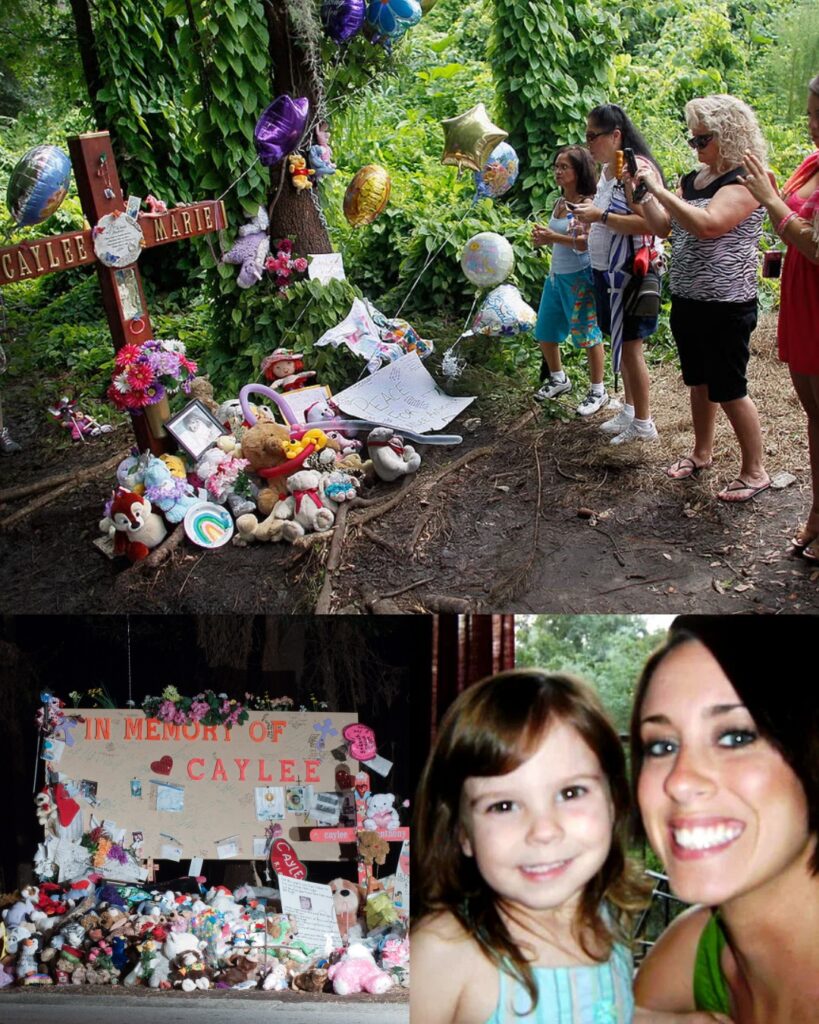
It began with a smell.
A frantic 911 call.
And a mother’s silence.
In the summer of 2008, the world was introduced to one of the most chilling and divisive cases in American criminal history — the disappearance and death of two-year-old Caylee Marie Anthony. What began as a missing child report in suburban Orlando, Florida, soon spiraled into a media storm that revealed layers of deception, denial, and disturbing truths about a young mother named Casey Anthony and the daughter she claimed to love.
When investigators first arrived at the Anthony home, nothing made sense. Caylee had not been seen for 31 days, and yet her mother never reported her missing. Instead, it was Cindy Anthony, Caylee’s grandmother, who made the 911 call that would send shockwaves across the country. “It smells like there’s been a dead body in the damn car,” she told the dispatcher, her voice trembling. That single statement — and the odor inside Casey’s Pontiac Sunfire — became the starting point of a case that still haunts the public conscience.
From the beginning, Casey’s story was riddled with lies. She claimed she worked at Universal Studios — she didn’t. She said she left Caylee with a nanny named Zanny — who didn’t exist. Every lead she gave investigators fell apart. Detectives soon realized they weren’t dealing with a panicked mother searching for her child; they were dealing with a web of deceit.
While the rest of the country was putting Caylee’s face on posters, Casey was living a different life. She was out drinking, entering hot-body contests, and posting photos of herself smiling with friends. Just days after Caylee was last seen alive, Casey got a tattoo on her shoulder: “Bella Vita,” Italian for “Beautiful Life.” To many, that ink became a cruel symbol — a mother celebrating freedom while her daughter was missing.
Months passed, and hope faded. Then, in December 2008, a utility worker stumbled upon something in a wooded area less than half a mile from the Anthony home: a small, duct-taped skull inside a trash bag. The remains were confirmed to be Caylee’s. Investigators found duct tape near the mouth, a heart-shaped sticker, and evidence suggesting the child had been placed there deliberately. The discovery turned the search into a homicide — and the world demanded justice.
When the trial of Casey Anthony began in 2011, it became one of the most-watched court cases in history. Television networks broadcast every moment, and the country was divided between those who saw her as a monster and those who wondered if she was a victim of something more complicated. The prosecution argued that Casey had murdered her daughter to free herself from the responsibilities of motherhood — a young woman craving the party lifestyle without a child holding her back. They presented her lies, her behavior, and the damning evidence of decomposition in her car trunk as proof of guilt.
But the defense, led by attorney José Baez, had a different story. They claimed Caylee had accidentally drowned in the family’s swimming pool and that Casey’s father, George Anthony, helped cover it up. They painted Casey as a victim of lifelong abuse and trauma, suggesting her erratic behavior stemmed from years of manipulation and pain. The defense didn’t need to prove innocence — only to plant doubt.
And doubt they did.
After weeks of emotional testimony and mountains of forensic evidence, the jury reached a verdict that stunned the nation: Not Guilty of murder, manslaughter, and child abuse. Casey Anthony was only convicted of lying to law enforcement — a charge that carried a short sentence. Within days, she walked free.
The public erupted in outrage. Protesters gathered outside the courthouse, chanting “Justice for Caylee.” TV hosts condemned the verdict, jurors received threats, and legal experts debated how such a high-profile case could end with no one held accountable. But the law had spoken — and Casey was free to begin her “beautiful life” once more.
Years later, the questions remain unanswered. No one knows exactly what happened to Caylee. Was it truly an accident, as the defense claimed? Or was there something far darker — an act of selfishness and cruelty that ended a child’s life?
Casey Anthony has largely stayed out of the public eye, occasionally surfacing in interviews where she maintains her innocence. “I don’t care what anyone thinks about me,” she once said. “I never did anything to hurt my daughter.” But for millions of Americans, her words ring hollow. The image of a carefree young woman smiling at a nightclub while her toddler lay lifeless in the woods remains impossible to forget.
The case of Caylee Anthony changed how the public viewed missing children and the justice system itself. It became a cautionary tale about lies, media sensationalism, and the limits of proof in a courtroom. It showed how a mother’s behavior — her silence, her choices, her smile — could spark national fury.
Seventeen years later, the same question still lingers, haunting every documentary, every headline, every whispered discussion about the case:
Was it truly an accident — or something far darker?